Functional Diagnostics Department
Heart Tests
At the Functional Diagnostics Department of West Tallinn Central Hospital, we perform tests to assess heart health and help diagnose heart disease. These include electrocardiography (ECG), echocardiography (heart ultrasound), exercise stress tests, Holter monitoring and blood pressure monitoring.
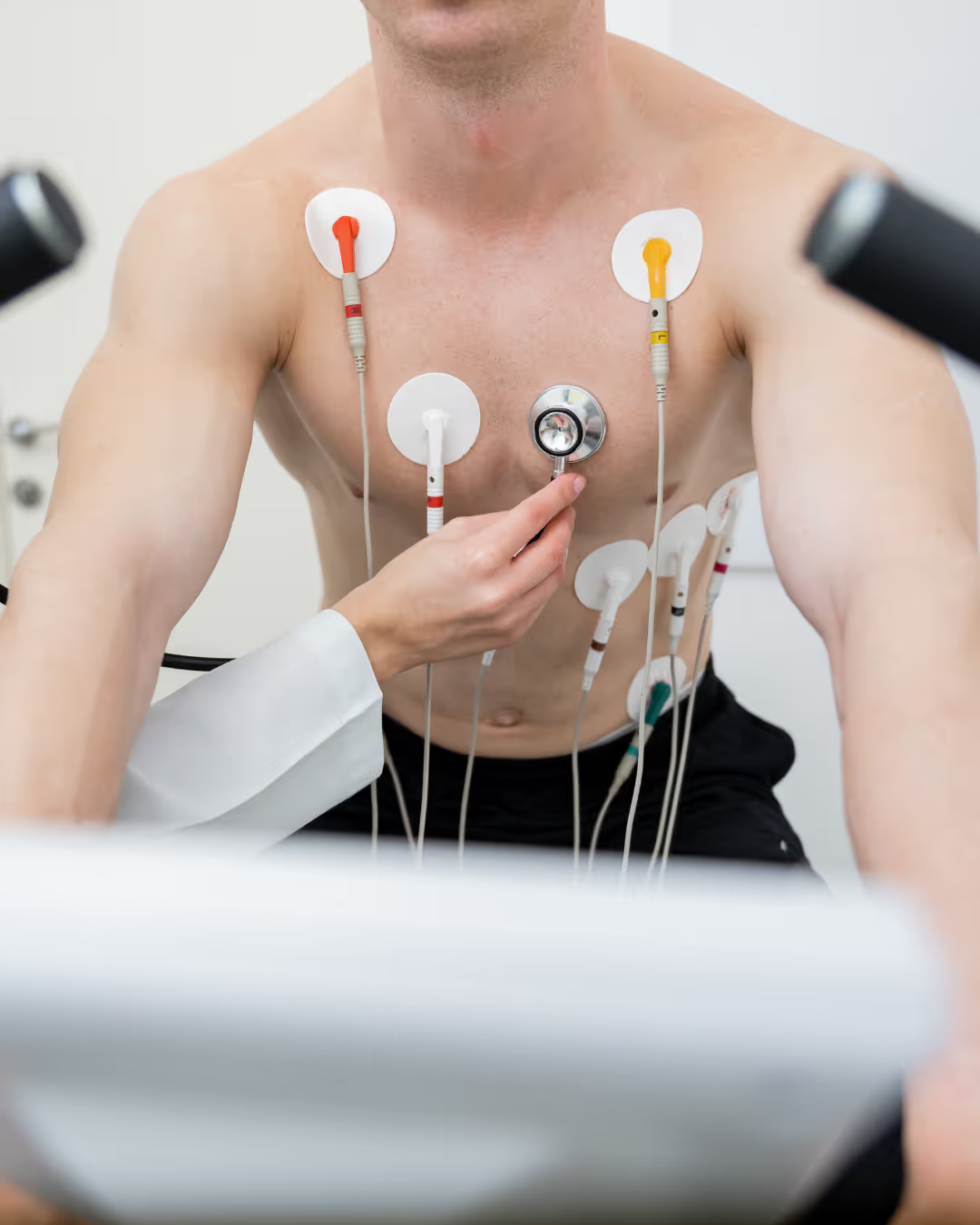
The following tests help assess heart health:
Electrocardiography (ECG)
An ECG records the heart’s electrical activity, providing information about heart rate and rhythm and helping the doctor identify possible abnormalities. Electrodes are attached to the patient’s chest and limbs. The patient needs to lie still during the recording.
Echocardiography (Heart Ultrasound)
This test shows the structure of the heart and allows the specialist to assess how well the valves work and how effectively the heart muscle pumps blood. The specialist moves an ultrasound probe across different areas of the chest and examines the images on a screen. Gel is used between the probe and the skin.
Exercise Stress Test
An exercise stress test shows how the heart responds to physical exertion. The patient exercises on a stationary bicycle or treadmill while the workload gradually increases. ECG, blood pressure and the patient’s symptoms are monitored throughout the test to assess exercise tolerance and identify possible problems with heart function.
Holter Monitoring
Some heart rhythm disturbances occur only occasionally. A Holter monitor helps detect them by recording the heart’s electrical activity outside the examination room. The small portable device is connected to electrodes attached to the chest and continues recording during everyday activities and rest.
Blood Pressure Monitoring
A single measurement cannot show how blood pressure changes throughout the day and night. During monitoring, a cuff worn on the upper arm and connected to a portable device automatically measures blood pressure at regular intervals. The results help the doctor confirm or clarify a diagnosis of hypertension and assess how well treatment is working.

The department is headed by